Regulated Without Representation

A seven-part series by internet law solicitor Yair Cohen on how Britain regulates the internet: who pays for Ofcom, how the Online Safety Act reaches American companies with no office here, what the speech laws do to British citizens, the plan to put approved news at the top of your feed, and the bill nobody in Whitehall has counted. Written for anyone interested, with sourced detail for lawyers and website operators. Start with the introduction, Dear America, Ofcom has sent you a bill.

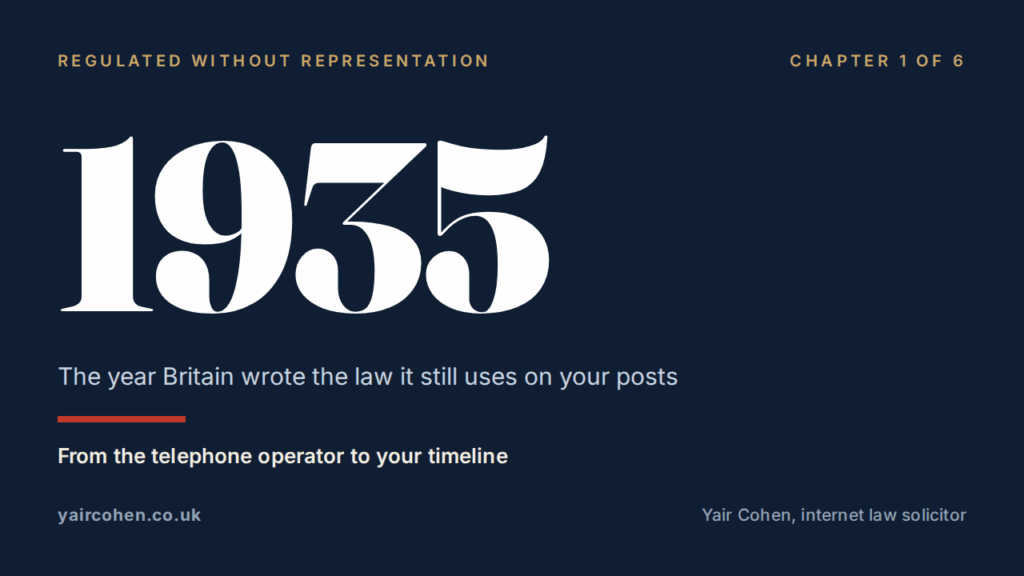
From the telephone operator to your timeline: how a 1935 law about rude phone calls became Britain's weapon against the internet

From the telephone operator to your timeline: how a 1935 law about rude phone calls became Britain’s weapon against the internet

This is chapter 1 of Regulated Without Representation, a series by internet law solicitor Yair Cohen on how Britain regulates the internet and who pays for it. New here? Start with the introduction. Picture a telephone exchange in 1935. Rows of young women in headsets, a wall of sockets and cords, and a voice in

From the telephone operator to your timeline: how a 1935 law about rude phone calls became Britain’s weapon against the internet Read More »

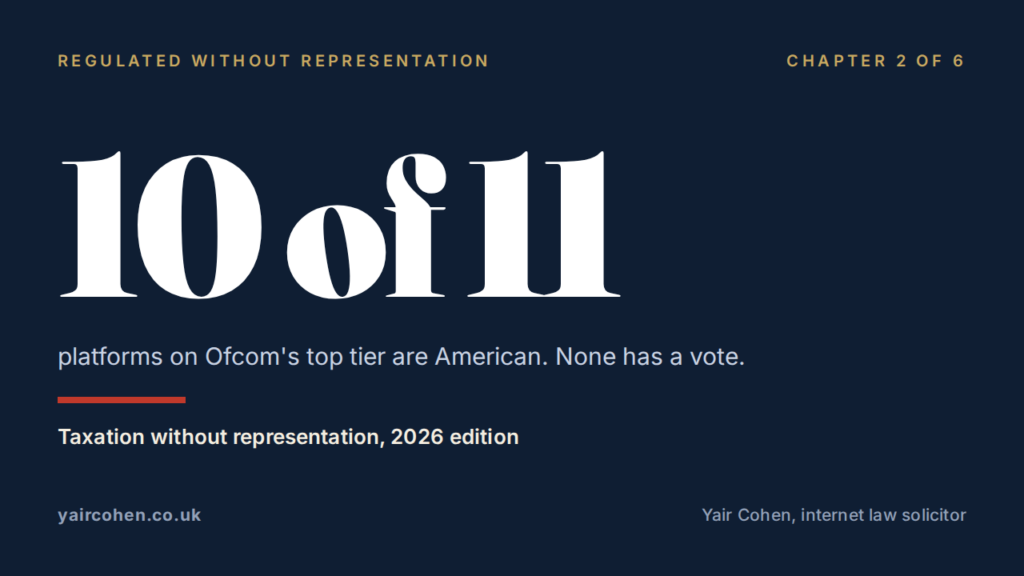
Taxation without representation, 2026 edition: Britain sends Silicon Valley the invoice for its own regulator

Taxation without representation, 2026 edition: Britain sends Silicon Valley the invoice for its own regulator

This is chapter 2 of Regulated Without Representation, a series by internet law solicitor Yair Cohen on how Britain regulates the internet and who pays for it. New here? Start with the introduction. The previous chapter is here. In the spring of 1765 the British Parliament had a problem that will sound familiar to any

Taxation without representation, 2026 edition: Britain sends Silicon Valley the invoice for its own regulator Read More »

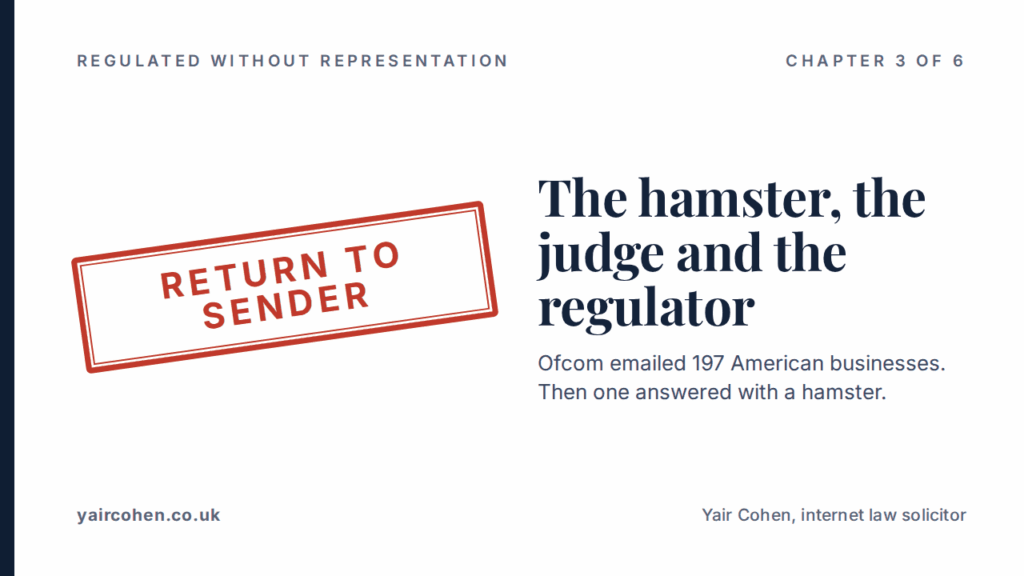
The hamster, the judge and the regulator: 4chan v Ofcom explained

The hamster, the judge and the regulator: 4chan v Ofcom explained

This is chapter 3 of Regulated Without Representation, a series by internet law solicitor Yair Cohen on how Britain regulates the internet and who pays for it. New here? Start with the introduction. The previous chapter is here. On 14 April 2025 an email arrived at an American message board called 4chan. The sender was

The hamster, the judge and the regulator: 4chan v Ofcom explained Read More »

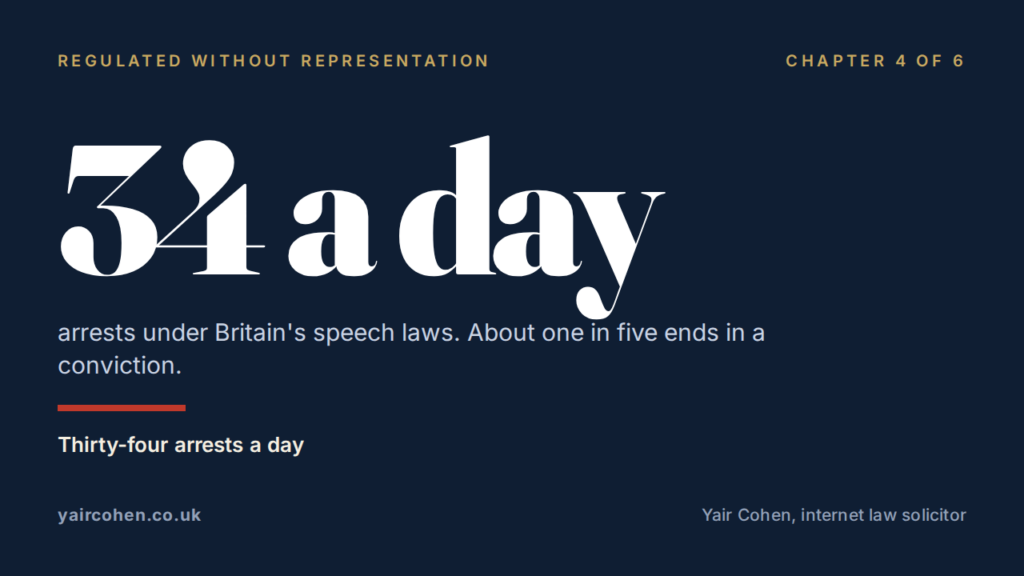
Thirty-four arrests a day: what Britain does to its own citizens for words, and the repeal it promised and forgot

Thirty-four arrests a day: what Britain does to its own citizens for words, and the repeal it promised and forgot

This is chapter 4 of Regulated Without Representation, a series by internet law solicitor Yair Cohen on how Britain regulates the internet and who pays for it. New here? Start with the introduction. The previous chapter is here. On the afternoon of 29 July 2024 a seventeen year old walked into a Taylor Swift themed

Thirty-four arrests a day: what Britain does to its own citizens for words, and the repeal it promised and forgot Read More »

Regulated Without Representation, chapter 5: Who decides what you read?

Who decides what you read? Britain’s plan to put a minister in your feed

This is chapter 5 of Regulated Without Representation, a series by internet law solicitor Yair Cohen on how Britain regulates the internet and who pays for it. New here? Start with the introduction. The previous chapter is here. Imagine the White House announced tomorrow that Google, YouTube and TikTok must put CNN and NBC at

Who decides what you read? Britain’s plan to put a minister in your feed Read More »

Regulated Without Representation, chapter 6: When the Americans say no

When the Americans say no: how the Stamp Act ended, and how this might

This is chapter 6 of Regulated Without Representation, a series by internet law solicitor Yair Cohen on how Britain regulates the internet and who pays for it. New here? Start with the introduction. The previous chapter is here. Somewhere in Whitehall, the district of London where the government departments sit, there is a spreadsheet. On

When the Americans say no: how the Stamp Act ended, and how this might Read More »

Scroll to Top